
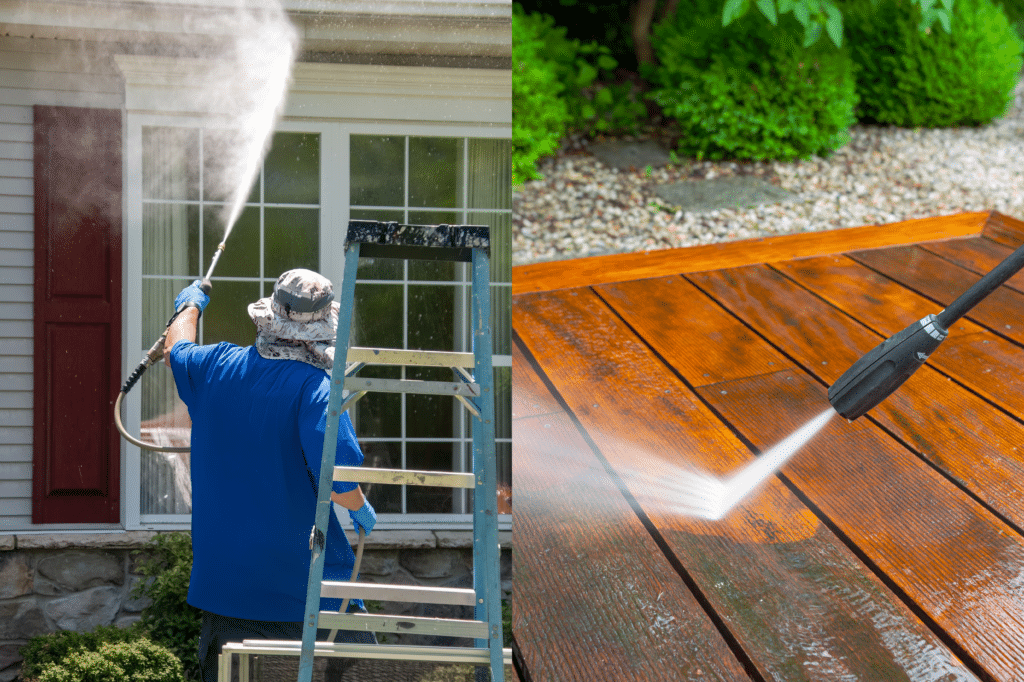
People often assume pressure washing and building washing are the same thing. After all, both involve water, both remove grime, and both leave your property looking far more respectable than it did that morning. But the two methods are designed for very different jobs, and choosing the wrong one can cause more problems than it solves.
Understanding the difference is more than a technical detail. It affects how long your surfaces last, how safe your site remains, and how professional your building looks to anyone walking through the door. When you know which service suits which material, maintenance becomes simpler, smarter, and much more cost-effective in the long run.
What Commercial Pressure Washing Actually Does
Pressure washing is all about force. Using a commercial pressure washer, we clean surfaces with a controlled burst of high-pressure water that cuts through grime, moss, oil, mildew, and anything else that’s set up camp where it doesn’t belong. It’s perfect for durable materials that can handle a strong clean without flinching.
Think paving, driveways, commercial garages, courtyards, and certain types of decking. In places like Auckland, where humidity encourages moss to grow at an alarming pace, or Wellington, where wind seems determined to redecorate every exterior surface with dust, pressure washing keeps outdoor areas safe and presentable.
The real strength of this method is its ability to remove growths that slowly damage surfaces. Mould and mildew trap moisture and gradually eat away at materials, so a proper pressure wash doesn’t just make things look tidy; it prevents long-term deterioration. Many business owners reach out for power pressure washing services when staff start slipping on walkways or clients comment on the state of the car park. Pressure washing sorts those issues quickly, and with the right technique, it does so without harming the underlying surface. If the material is tough, solid, and built to take a hit, pressure washing is usually the right call.
What Building Washing Does Differently
Building washing focuses on the exterior of the structure, so it has to take materials, coatings, and architectural details into account. A high-pressure blast might be brilliant for concrete, but it’s far too aggressive for painted surfaces, cladding, glass, or signage.
Instead, building washing uses soft washing, low-pressure cleaning, specialist detergents, and brushing techniques to lift grime gently. The aim is to keep the building clean without stripping paint, damaging finishes, or forcing water into places it shouldn’t go. Our building washing services cover everything from standard commercial façades to high-rise structures that require certified operators. Our team is trained in Elevated Work Platform and Working at Heights processes, so even multi-storey buildings get a safe, compliant clean.
It’s also the right option for materials that age quickly when handled roughly. Modern cladding, textured coatings, and heritage surfaces all need care rather than force. Soft washing removes lichen, mould, soot, and pollution stains without undermining the surface underneath.
In short, if the exterior is part of the building envelope or has a finish you’d rather not repaint any time soon, building washing is the safer and more sensible choice.
How to Decide Which Service You Need
Choosing between pressure washing and a commercial building wash is much easier when you break it down properly. A single question usually points you in the right direction: Can the surface actually handle strong pressure? From there, the decision becomes straightforward, and each category has some reliable indicators.
Surfaces that are strong, dense, and built for impact tend to suit pressure washing. This includes concrete, brick, pavers, driveways, commercial garage floors, and certain exterior walls that don’t have coatings to protect. These materials can tolerate a powerful cleaning without suffering any surface damage or water intrusion.
Surfaces that are painted, coated, textured, glazed, or part of the building’s main façade generally require building washing instead. Low-pressure methods protect paintwork, prevent accidental stripping, and avoid water being forced behind cladding or into seams that were never designed to handle high pressure.
Many commercial properties need a combination of both services to keep everything looking consistent. Pavements and pathways often benefit from pressure washing treatments, while façades, windows, and signage need the softer approach of building washing services.
Once you match each area of the property to the correct cleaning style, maintenance becomes far more efficient. You minimise unnecessary repairs, reduce avoidable surface damage, and keep the entire site looking professional and well cared for throughout the year.
Not Sure Which Service You Need?
If you’re still weighing up whether pressure washing or building washing is the right choice for your property, our team can point you in the right direction quickly. A quick look at your surfaces is usually all it takes for us to recommend the safest and most effective option. We’ll assess the materials, the level of grime, and the way your site handles Auckland or Wellington’s weather so you get a plan that actually suits your building.
Pressure and Building Washing FAQs
When’s the best time of year to book building washing?
Milder months usually offer ideal conditions. Spring is popular because it clears away winter residue. However, grime can appear at any time due to weather patterns. If the building looks dull, book sooner rather than later. The building’s condition is the best guide.
How often should a commercial property be pressure-washed?
Most sites benefit from pressure washing every three to six months, depending on foot traffic and weather exposure. Areas that grow moss quickly may need it more often. Auckland’s humidity and Wellington’s wind both speed up grime build-up. Regular cleaning keeps walkways safer. A tailored schedule ensures you don’t overdo it.
Will building washing affect my business operations?
Most building washing can be carried out with minimal disruption. We plan around entry points, public access areas, and operational hours to avoid interfering with staff or customers. When required, we section off small areas to maintain safety without shutting down your site.